

The True Hidden Costs of DIY vs Buying a Finished Live Edge Slab
- John Kuykendall
- May 4
- 4 min read

Updated: May 5
When you see videos of finishing a live edge slab, it often looks simple and cheap. Many DIY enthusiasts make it seem like all you need is some sandpaper and a few cans of finish. But the reality is very different. The process requires specialized tools, a lot of time, and materials that add up quickly. If you want a high-quality live edge slab that looks professional, you need to understand the true costs before deciding whether to finish it yourself or buy one already finished.
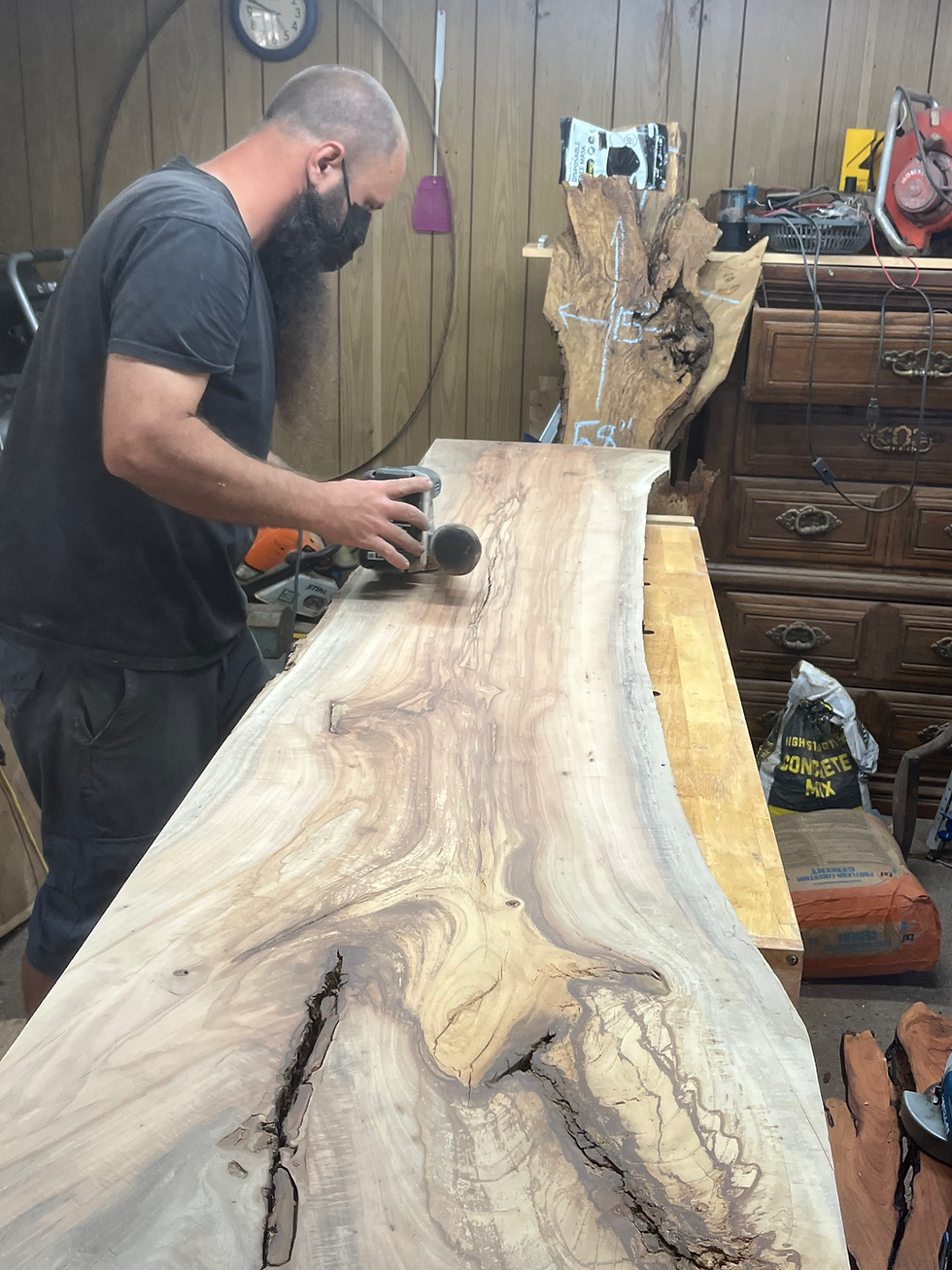
What Finishing a Live Edge Slab Yourself Really Involves
At first glance, finishing a slab might seem like just sanding and applying some oil or epoxy. But to get a smooth, flat surface and a durable finish, you need more than basic tools.
Specialized Tools You Need
Router sled or flattening jig: To flatten the slab evenly, a router sled or industrial planer is almost essential. These can cost anywhere from $1,500 to $5,000 if you buy one, or you can build your own, which takes time and materials.
Random orbital sander and belt sander: Multiple sanders are needed to handle rough surfaces and fine finishing. A good random orbital sander costs around $100-$200, and a belt sander can be $150-$300.
Dust collection system: Sanding creates a lot of dust. A dust collector or shop vacuum is necessary for health and cleanliness, costing $100 or more.
You can of course do all the sanding outside in front of a fan to save some money.
Clamps and work stands: To hold the slab steady during work, you’ll need clamps and a sturdy woodworking table, which can add $150-$500.
Materials and Consumables
Sandpaper: You will go through many sheets of sandpaper, from coarse grit (60-80) to very fine (320-400). A full sanding job can easily use $50-$100 worth of sandpaper.
Finishing oils: High quality oils like tung oil or Danish oil cost $20-$50 per quart. You may need multiple coats.
Epoxy resin: If you want to fill cracks or create a glossy finish, high quality epoxy can cost $100-$200 per kit. Epoxy is tricky to work with and requires careful mixing and application.
Wood filler and sealers: Additional materials may be needed to fill knots and cracks before finishing or skim coating to prevent bubbles in epoxy.
Time Investment
Finishing a slab properly takes many hours or even days. Sanding alone can take 10-20 hours depending on the slab size and condition. Applying oils or epoxy requires drying time between coats, sometimes up to 24 hours each, leaving your project vulnerable. This is time you need to factor in, especially if you are balancing other responsibilities in the same workspace.
Buying a Finished Live Edge Slab
When you buy a finished slab from a sawmill or a professional woodworker, you pay for the convenience and expertise. These slabs are flattened, sanded, and finished to a high standard, ready to use.
What You Pay For
Material cost: High quality slabs from a sawmill vary widely in price depending on species, size, and rarity. Expect $15-$30 per board foot for common hardwoods, and more for exotic woods.
Labor and finishing: The finishing process is included in the price. This covers the use of professional tools, materials, and the skill of the woodworker.
Warranty and quality assurance: Finished slabs often come with some guarantee of quality and durability.
Cost Comparison Example
Item
Raw slab (20 board feet)
DIY Cost Estimate: $300 - $600
Router sled
DIY Cost Estimate: $200-$500 (about the same cost to rent an industrial cnc machine or planer)
Buying Finished Slab Estimate: Included
Sanders
DIY Cost Estimate: $100-$300 (one-time)
Buying Finished Slab Estimate: Included
Sandpaper
DIY Cost Estimate: $75
Buying Finished Slab Estimate: Included
Finishing oils or skim coats
DIY Cost Estimate: $40
Buying Finished Slab Estimate: Included
Epoxy resin
DIY Cost Estimate: $150-$500
Buying Finished Slab Estimate: Included
Miscellaneous expenses (plastic sheathing, mixing containers, ect.)
DIY Cost Estimate: $200 (one-time)
Buying Finished Slab Estimate: Included
Time (20 hours @ $20/hr)
DIY Cost Estimate: $400 (opportunity cost)
Buying Finished Slab Estimate: Included
Total Estimates
DIY Cost Estimate: $1,465 - $1,765 + Risk, Cure Time, Space Requirements
Buying Finished Slab Estimate: $1600 - $1900
Note: Buying a finished slab price varies by wood species and finish quality.

Why Many DIY Finishing Videos Don’t Tell the Whole Story
Many videos focus on the fun parts of finishing a slab: sanding, applying oil, and showing the final shine. They often skip or downplay:
The cost of buying, renting or building specialized tools.
The large amount of sandpaper and consumable materials used.
The skill and patience required to avoid mistakes.
The time spent and space required waiting for finishes to dry or cure.
The challenges of working with epoxy, which can bubble or cure unevenly.
If you don’t have access to a sawmill or a professional woodworker, or if you enjoy woodworking as a hobby, DIY finishing can be rewarding. But if you want a flawless, high-quality slab without surprises, buying finished is often more cost-effective.

Making the Right Choice for You
Think about your priorities:
Budget: If you want to save money upfront and already own tools, DIY might work. But factor in the hidden costs.
Time: If you don’t have hours to spend sanding and finishing, buying finished saves time.
Skill level: Finishing a slab "well" takes practice. Mistakes can be costly!
Quality: Finished slabs from sawmills or professional woodworkers come with consistent quality and finish.
You can also consider a hybrid approach: buy a slab from a sawmill and hire a professional woodworker to finish it. This can balance cost and quality.
Understanding the real costs helps you make a clear decision. Whether you choose to finish your own slab or buy one ready to go, now you know what to expect to get a beautiful piece that lasts.
